

dn17:1.1.1 So I have heard.
BAGIAN 1
dn17:1.1.2 At one time the Buddha was staying between a pair of sal trees in the sal forest of the Mallas at Upavattana near Kusinārā at the time of his full extinguishment.
dn17:1.2.1 Then Venerable Ānanda went up to the Buddha, bowed, sat down to one side, and said to him,
dn17:1.2.2 “Sir, please don’t be fully extinguished in this little hamlet, this jungle hamlet, this branch hamlet.
dn17:1.2.3 There are other great cities such as
dn17:1.2.4 Campā, Rājagaha, Sāvatthī, Sāketa, Kosambī, and Varanasi.
dn17:1.2.5 Let the Buddha be fully extinguished there.
dn17:1.2.6 There are many well-to-do aristocrats, brahmins, and householders there who are devoted to the Buddha. They will perform the rites of venerating the Realized One’s corpse.”
dn17:1.3.1 “Don’t say that, Ānanda! Don’t say that
dn17:1.3.2 this is a little hamlet, a jungle hamlet, a branch hamlet.
dn17:1.3.3.0 1. The Capital City of Kusāvatī
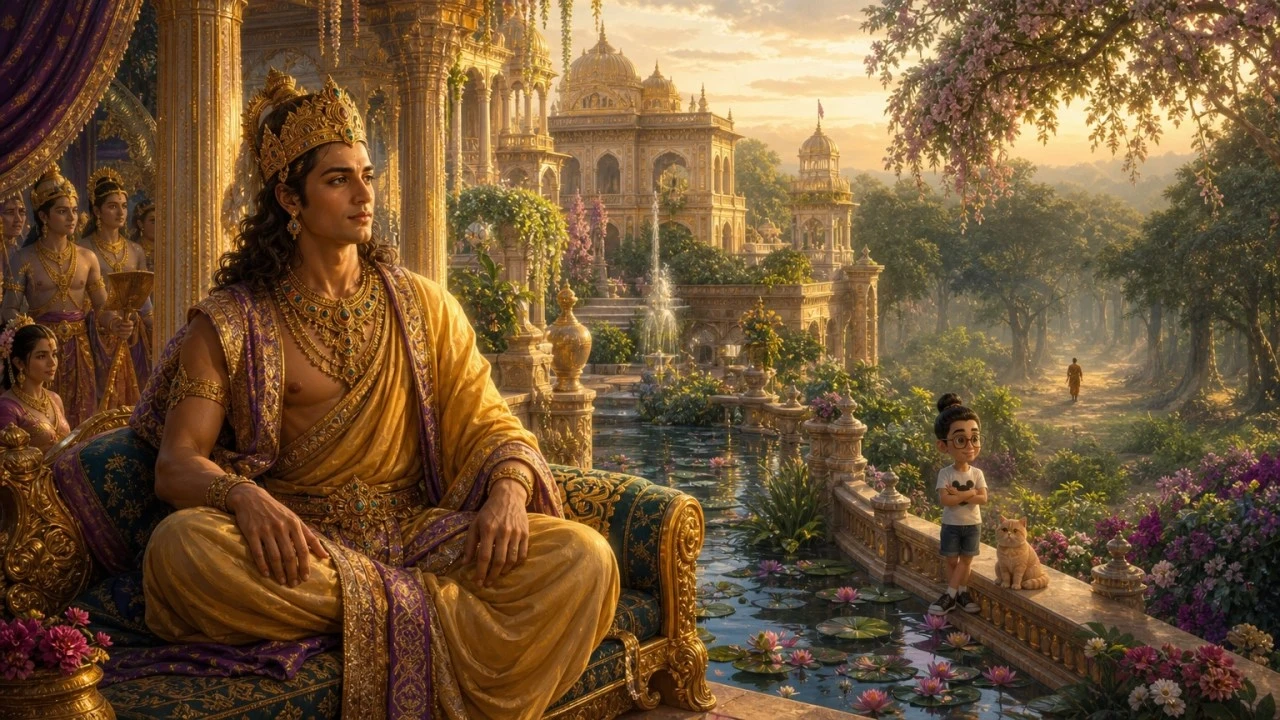
dn17:1.3.4 Once upon a time, there was a king named Mahāsudassana whose dominion extended to all four sides, and who achieved stability in the country.
dn17:1.3.5 His capital was this Kusinārā, which at the time was named Kusāvatī.
dn17:1.3.6 It stretched for twelve leagues from east to west, and seven leagues from north to south.
dn17:1.3.7 The royal capital of Kusāvatī was successful and prosperous, populous and full of people, with plenty of food.
dn17:1.3.8 It was just like Āḷakamandā, the royal capital of the gods, which is successful and prosperous, populous and full of spirits, with plenty of food.
dn17:1.3.10 Kusāvatī was never free of ten sounds by day or night, namely:
dn17:1.3.11 the sound of elephants, horses, chariots, drums, clay drums, arched harps, singing, horns, gongs, and handbells; and the cry, ‘Eat, drink, be merry!’ as the tenth.
dn17:1.4.1 Kusāvatī was encircled by seven ramparts:
dn17:1.4.2 one made of gold, one made of silver, one made of beryl, one made of crystal, one made of ruby, one made of emerald, and one made of all precious things.
dn17:1.5.1 It had four gates,
dn17:1.5.2 made of gold, silver, beryl, and crystal.
dn17:1.5.3 At each gate there were seven pillars, three fathoms deep and four fathoms high,
dn17:1.5.4 made of gold, silver, beryl, crystal, ruby, emerald, and all precious things.
dn17:1.6.1 It was surrounded by seven rows of palm trees,
dn17:1.6.2 made of gold, silver, beryl, crystal, ruby, emerald, and all precious things.
dn17:1.6.3 The golden palms had trunks of gold, and leaves and fruits of silver.
dn17:1.6.4 The silver palms had trunks of silver, and leaves and fruits of gold.
dn17:1.6.5 The beryl palms had trunks of beryl, and leaves and fruits of crystal.
dn17:1.6.6 The crystal palms had trunks of crystal, and leaves and fruits of beryl.
dn17:1.6.7 The ruby palms had trunks of ruby, and leaves and fruits of emerald.
dn17:1.6.8 The emerald palms had trunks of emerald, and leaves and fruits of ruby.
dn17:1.6.9 The palms of all precious things had trunks of all precious things, and leaves and fruits of all precious things.
dn17:1.6.10 When those rows of palm trees were blown by the wind they sounded graceful, tantalizing, sensuous, lovely, and intoxicating,
dn17:1.6.11 like a quintet made up of skilled musicians who had practiced well and kept excellent rhythm.
dn17:1.6.13 And any addicts, carousers, or drunkards in Kusāvatī at that time were entertained by that sound.
dn17:1.7.0.1 2. The Seven Treasures
dn17:1.7.0.2 2.1. The Wheel-Treasure
dn17:1.7.1 King Mahāsudassana possessed seven treasures and four blessings.
dn17:1.7.2 What seven?
dn17:1.7.3 On a fifteenth day sabbath, King Mahāsudassana had bathed his head and gone upstairs in the royal longhouse to observe the sabbath.
dn17:1.7.4 And the heavenly wheel-treasure appeared to him, with a thousand spokes, with rim and hub, complete in every detail.
dn17:1.7.5 Seeing this, the king thought,
dn17:1.7.6 ‘I have heard that when the heavenly wheel-treasure appears to a king in this way, he becomes a wheel-turning monarch.
dn17:1.7.7 Am I then a wheel-turning monarch?’
dn17:1.8.1 Then King Mahāsudassana, rising from his seat and arranging his robe over one shoulder, took a ceremonial vase in his left hand and besprinkled the wheel-treasure with his right hand, saying:
dn17:1.8.2 ‘Roll forth, O wheel-treasure! Triumph, O wheel-treasure!’
dn17:1.8.3 Then the wheel-treasure rolled toward the east. And the king followed it together with his army of four divisions. In whatever place the wheel-treasure stood still, there the king came to stay together with his army.
dn17:1.9.1 And any opposing rulers of the eastern quarter came to him and said,
dn17:1.9.2 ‘Come, Great King! Welcome, Great King! We are yours, Great King, instruct us.’
dn17:1.9.3 The king said,
dn17:1.9.4 ‘Do not kill living creatures. Do not steal. Do not commit sexual misconduct. Do not lie. Do not drink liquor. Maintain the current level of taxation.’
dn17:1.9.5 And so the opposing rulers of the eastern quarter became his vassals.
dn17:1.10.1 Then the wheel-treasure, having plunged into the eastern ocean and emerged again, rolled toward the south. …
dn17:1.10.2 Having plunged into the southern ocean and emerged again, it rolled toward the west. …
dn17:1.10.3 Having plunged into the western ocean and emerged again, it rolled toward the north, followed by the king together with his army of four divisions.
dn17:1.10.4 In whatever place the wheel-treasure stood still, there the king came to stay together with his army.
dn17:1.10.5 And any opposing rulers of the northern quarter came to him and said,
dn17:1.10.6 ‘Come, Great King! Welcome, Great King! We are yours, Great King, instruct us.’
dn17:1.10.7 The king said,
dn17:1.10.8 ‘Do not kill living creatures. Do not steal. Do not commit sexual misconduct. Do not lie. Do not drink liquor. Maintain the current level of taxation.’
dn17:1.10.9 And so the opposing rulers of the northern quarter became his vassals.
dn17:1.11.1 And then the wheel-treasure, having triumphed over this land surrounded by ocean, returned to the royal capital. There it stood still by the gate to the royal compound at the High Court as if fixed to an axle, illuminating the royal compound.
dn17:1.11.2 Such is the wheel-treasure that appeared to King Mahāsudassana.
dn17:1.12.0 2.2. The Elephant-Treasure
dn17:1.12.1 Next, the elephant-treasure appeared to King Mahāsudassana.
dn17:1.12.2 It was an all-white sky-walker with psychic power, touching the ground in seven places, a king of elephants named Sabbath.
dn17:1.12.3 Seeing him, the king was impressed,
dn17:1.12.4 ‘This would truly be a fine elephant vehicle, if he would submit to taming.’
dn17:1.12.5 Then the elephant-treasure submitted to taming, as if he was a fine thoroughbred elephant that had been tamed for a long time.
dn17:1.12.6 Once it so happened that King Mahāsudassana, testing that same elephant-treasure, mounted him in the morning and traversed the land surrounded by ocean before returning to the royal capital in time for breakfast.
dn17:1.12.7 Such is the elephant-treasure that appeared to King Mahāsudassana.
dn17:1.13.0 2.3. The Horse-Treasure
dn17:1.13.1 Next, the horse-treasure appeared to King Mahāsudassana.
dn17:1.13.2 It was an all-white sky-walker with psychic power, with head of black and mane like woven reeds, a royal steed named Thundercloud.
dn17:1.13.3 Seeing him, the king was impressed,
dn17:1.13.4 ‘This would truly be a fine horse vehicle, if he would submit to taming.’
dn17:1.13.5 Then the horse-treasure submitted to taming, as if he was a fine thoroughbred horse that had been tamed for a long time.
dn17:1.13.6 Once it so happened that King Mahāsudassana, testing that same horse-treasure, mounted him in the morning and traversed the land surrounded by ocean before returning to the royal capital in time for breakfast.
dn17:1.13.7 Such is the horse-treasure that appeared to King Mahāsudassana.
dn17:1.14.0 2.4. The Jewel-Treasure
dn17:1.14.1 Next, the jewel-treasure appeared to King Mahāsudassana.
dn17:1.14.2 It was a beryl gem that was naturally lustrous, eight-faceted, well-worked, transparent, clear, and unclouded, endowed with all good qualities.
dn17:1.14.3 And the radiance of that jewel spread all-round for a league.
dn17:1.14.4 Once it so happened that King Mahāsudassana, testing that same jewel-treasure, mobilized his army of four divisions and, with the jewel hoisted on his banner, set out in the dark of the night.
dn17:1.14.5 Then the villagers around them set off to work, thinking that it was day.
dn17:1.14.6 Such is the jewel-treasure that appeared to King Mahāsudassana.
dn17:1.15.0 2.5. The Woman-Treasure
dn17:1.15.1 Next, the woman-treasure appeared to King Mahāsudassana.
dn17:1.15.2 She was attractive, good-looking, lovely, of surpassing beauty. She was neither too tall nor too short; neither too thin nor too fat; neither too dark nor too light. She outdid human beauty without reaching heavenly beauty.
dn17:1.15.3 And her touch was like a tuft of cotton-wool or kapok.
dn17:1.15.4 When it was cool her limbs were warm, and when it was warm her limbs were cool.
dn17:1.15.5 The fragrance of sandal floated from her body, and lotus from her mouth.
dn17:1.15.6 She got up before the king and went to bed after him, and was obliging, behaving nicely and speaking politely.
dn17:1.15.7 The woman-treasure did not betray the wheel-turning monarch even in thought, still less in deed.
dn17:1.15.8 Such is the woman-treasure that appeared to King Mahāsudassana.
dn17:1.16.0 2.6. The Householder-Treasure
dn17:1.16.1 Next, the householder-treasure appeared to King Mahāsudassana.
dn17:1.16.2 The power of clairvoyance manifested in him as a result of past deeds, by which he sees treasure troves, both owned and ownerless.
dn17:1.16.3 He approached the king and said,
dn17:1.16.4 ‘Relax, Your Majesty. I will take care of the treasury.’
dn17:1.16.5 Once it so happened that the wheel-turning monarch, testing that same householder-treasure, boarded a boat and sailed to the middle of the Ganges River. Then he said to the householder-treasure,
dn17:1.16.6 ‘Householder, I need gold, both coined and uncoined.’
dn17:1.16.7 ‘Well then, Great King, draw the boat up to one shore.’
dn17:1.16.8 ‘It’s right here, householder, that I need gold, both coined and uncoined.’
dn17:1.16.9 Then that householder-treasure, immersing both hands in the water, pulled up a pot full of gold, both coined and uncoined, and said to the king,
dn17:1.16.10 ‘Is this sufficient, Great King? Has enough been done, Great King, enough offered?’
dn17:1.16.11 The king said,
dn17:1.16.12 ‘That is sufficient, householder. Enough has been done, enough offered.’
dn17:1.16.13 Such is the householder-treasure that appeared to King Mahāsudassana.
dn17:1.17.0 2.7. The Commander-Treasure
dn17:1.18.1 Next, the commander-treasure appeared to King Mahāsudassana.
dn17:1.18.2 He is astute, competent, intelligent, and capable regarding who should be ushered in to the king’s presence, who should be ushered out, and who should be kept by his side.
dn17:1.18.3 He approached the king and said,
dn17:1.18.4 ‘Relax, Your Majesty. I shall issue instructions.’
dn17:1.18.5 Such is the commander-treasure that appeared to King Mahāsudassana.
dn17:1.18.6 These are the seven treasures possessed by King Mahāsudassana.
dn17:1.18.7.0 3. The Four Blessings
dn17:1.18.8 King Mahāsudassana possessed four blessings.
dn17:1.18.9 And what are the four blessings?
dn17:1.18.10 He was attractive, good-looking, lovely, of surpassing beauty, more so than other humans.
dn17:1.18.11 This is the first blessing.
dn17:1.19.1 Furthermore, he was long-lived, more so than other humans.
dn17:1.19.2 This is the second blessing.
dn17:1.20.1 Furthermore, he was rarely ill or unwell, and his stomach digested well, being neither too hot nor too cold, more so than other humans.
dn17:1.20.2 This is the third blessing.
dn17:1.21.1 Furthermore, he was as dear and beloved to the brahmins and householders
dn17:1.21.2 as a father is to his children.
dn17:1.21.4 And the brahmins and householders were as dear to the king
dn17:1.21.5 as children are to their father.
dn17:1.21.7 Once it so happened that King Mahāsudassana went with his army of four divisions to visit a park.
dn17:1.21.8 Then the brahmins and householders went up to him and said,
dn17:1.21.9 ‘Slow down, Your Majesty, so we may see you longer!’
dn17:1.21.10 And the king addressed his charioteer,
dn17:1.21.11 ‘Drive slowly, charioteer, so I can see the brahmins and householders longer!’
dn17:1.21.12 This is the fourth blessing.
dn17:1.21.13 These are the four blessings possessed by King Mahāsudassana.
dn17:1.22.0 4. Lotus Ponds in the Palace of Principle
dn17:1.22.1 Then King Mahāsudassana thought,
dn17:1.22.2 ‘Why don’t I have lotus ponds built between the palms, at intervals of a hundred bow lengths?’
dn17:1.22.3 So that’s what he did.
dn17:1.22.4 The lotus ponds were lined with tiles of four colors,
dn17:1.22.5 made of gold, silver, beryl, and crystal.
dn17:1.22.6 And four flights of stairs of four colors descended into each lotus pond,
dn17:1.22.7 made of gold, silver, beryl, and crystal.
dn17:1.22.8 The golden stairs had posts of gold, and banisters and finials of silver.
dn17:1.22.9 The silver stairs had posts of silver, and banisters and finials of gold.
dn17:1.22.10 The beryl stairs had posts of beryl, and banisters and finials of crystal.
dn17:1.22.11 The crystal stairs had posts of crystal, and banisters and finials of beryl.
dn17:1.22.12 Those lotus ponds were surrounded by two balustrades, made of gold and silver.
dn17:1.22.13 The golden balustrades had posts of gold, and banisters and finials of silver.
dn17:1.22.14 The silver balustrades had posts of silver, and banisters and finials of gold.
dn17:1.23.1 Then King Mahāsudassana thought,
dn17:1.23.2 ‘Why don’t I plant flowers in the lotus ponds such as blue water lilies, and lotuses of pink, yellow, and white, blooming all year round, and accessible to the public?’
dn17:1.23.3 So that’s what he did.
dn17:1.23.4 Then King Mahāsudassana thought,
dn17:1.23.5 ‘Why don’t I appoint bath attendants to help bathe the people who come to bathe in the lotus ponds?’
dn17:1.23.6 So that’s what he did.
dn17:1.23.7 Then King Mahāsudassana thought,
dn17:1.23.8 ‘Why don’t I set up charities on the banks of the lotus ponds,
dn17:1.23.9 so that those in need of food, drink, clothes, vehicles, beds, women, coined gold, or uncoined gold can get what they need?’
dn17:1.23.10 So that’s what he did.
dn17:1.24.1 Then the brahmins and householders came to the king bringing abundant wealth and said,
dn17:1.24.2 ‘Your Majesty, this abundant wealth is specially for you alone; may Your Majesty accept it!’
dn17:1.24.3 ‘There’s enough raised for me through regular taxes. Let this be for you; and here, take even more!’
dn17:1.24.4 When the king turned them down, they withdrew to one side to think up a plan,
dn17:1.24.5 ‘It wouldn’t be proper for us to take this abundant wealth back to our own homes.
dn17:1.24.6 Why don’t we build a home for King Mahāsudassana?’
dn17:1.24.7 They went up to the king and said,
dn17:1.24.8 ‘We shall have a home built for you, Your Majesty!’
dn17:1.24.9 King Mahāsudassana consented with silence.
dn17:1.25.1 And then Sakka, lord of gods, knowing the king’s train of thought, addressed the godling Vissakamma,
dn17:1.25.2 ‘Come, dear Vissakamma, build a palace named Principle as a home for King Mahāsudassana.’
dn17:1.25.3 ‘Yes, lord,’ replied Vissakamma. Then, as easily as a strong person would extend or contract their arm, he vanished from the gods of the thirty-three and appeared in front of King Mahāsudassana.
dn17:1.25.4 Vissakamma said to the king,
dn17:1.25.5 ‘I shall build a palace named Principle as a home for you, Your Majesty.’
dn17:1.25.6 King Mahāsudassana consented with silence.
dn17:1.25.7 And so that’s what Vissakamma did.
dn17:1.25.8 The Palace of Principle stretched for a league from east to west, and half a league from north to south.
dn17:1.25.9 It was lined with tiles of four colors, three fathoms high,
dn17:1.25.10 made of gold, silver, beryl, and crystal.
dn17:1.26.1 It had 84,000 pillars of four colors,
dn17:1.26.2 made of gold, silver, beryl, and crystal.
dn17:1.26.3 It was covered with panels of four colors,
dn17:1.26.4 made of gold, silver, beryl, and crystal.
dn17:1.26.5 It had twenty-four staircases of four colors,
dn17:1.26.6 made of gold, silver, beryl, and crystal.
dn17:1.26.7 The golden stairs had posts of gold, and banisters and finials of silver.
dn17:1.26.8 The silver stairs had posts of silver, and banisters and finials of gold.
dn17:1.26.9 The beryl stairs had posts of beryl, and banisters and finials of crystal.
dn17:1.26.10 The crystal stairs had posts of crystal, and banisters and finials of beryl.
dn17:1.26.11 It had 84,000 chambers of four colors,
dn17:1.26.12 made of gold, silver, beryl, and crystal.
dn17:1.26.13 In each chamber a couch was spread: in the golden chamber a couch of silver; in the silver chamber a couch of gold; in the beryl chamber a couch of ivory; in the crystal chamber a couch of hardwood.
dn17:1.26.14 At the door of the golden chamber stood a palm tree of silver, with trunk of silver, and leaves and fruits of gold.
dn17:1.26.15 At the door of the silver chamber stood a palm tree of gold, with trunk of gold, and leaves and fruits of silver.
dn17:1.26.16 At the door of the beryl chamber stood a palm tree of crystal, with trunk of crystal, and leaves and fruits of beryl.
dn17:1.26.17 At the door of the crystal chamber stood a palm tree of beryl, with trunk of beryl, and leaves and fruits of crystal.
dn17:1.27.1 Then King Mahāsudassana thought,
dn17:1.27.2 ‘Why don’t I build a grove of golden palm trees at the door to the Chamber of the Grand Tower, where I can sit for the day?’
dn17:1.27.3 So that’s what he did.
dn17:1.28.1 The Palace of Principle was surrounded by two balustrades, made of gold and silver.
dn17:1.28.2 The golden balustrades had posts of gold, and banisters and finials of silver.
dn17:1.28.3 The silver balustrades had posts of silver, and banisters and finials of gold.
dn17:1.29.1 The Palace of Principle was surrounded by two nets of bells,
dn17:1.29.2 made of gold and silver.
dn17:1.29.3 The golden net had bells of silver, and the silver net had bells of gold.
dn17:1.29.4 When those nets of bells were blown by the wind they sounded graceful, tantalizing, sensuous, lovely, and intoxicating,
dn17:1.29.5 like a quintet made up of skilled musicians who had practiced well and kept excellent rhythm.
dn17:1.29.7 And any addicts, carousers, or drunkards in Kusāvatī at that time were entertained by that sound.
dn17:1.29.8 When it was finished, the palace was hard to look at, dazzling to the eyes.
dn17:1.29.9 It was like how in the last month of the rainy season, in autumn, when the heavens are sunny and cloudless, as the sun is rising to the firmament, it is hard to look at, dazzling to the eyes.
dn17:1.30.1 Then King Mahāsudassana thought,
dn17:1.30.2 ‘Why don’t I build a lotus pond named Principle in front of the palace?’
dn17:1.30.3 So that’s what he did.
dn17:1.30.4 The Lotus Pond of Principle stretched for a league from east to west, and half a league from north to south.
dn17:1.30.5 It was lined with tiles of four colors,
dn17:1.30.6 made of gold, silver, beryl, and crystal.
dn17:1.31.1 It had twenty-four staircases of four colors,
dn17:1.31.2 made of gold, silver, beryl, and crystal.
dn17:1.31.3 The golden stairs had posts of gold, and banisters and finials of silver.
dn17:1.31.4 The silver stairs had posts of silver, and banisters and finials of gold.
dn17:1.31.5 The beryl stairs had posts of beryl, and banisters and finials of crystal.
dn17:1.31.6 The crystal stairs had posts of crystal, and banisters and finials of beryl.
dn17:1.31.7 It was surrounded by two balustrades, made of gold and silver.
dn17:1.31.8 The golden balustrades had posts of gold, and banisters and finials of silver.
dn17:1.31.9 The silver balustrades had posts of silver, and banisters and finials of gold.
dn17:1.32.1 It was surrounded by seven rows of palm trees,
dn17:1.32.2 made of gold, silver, beryl, crystal, ruby, emerald, and all precious things.
dn17:1.32.3 The golden palms had trunks of gold, and leaves and fruits of silver.
dn17:1.32.4 The silver palms had trunks of silver, and leaves and fruits of gold.
dn17:1.32.5 The beryl palms had trunks of beryl, and leaves and fruits of crystal.
dn17:1.32.6 The crystal palms had trunks of crystal, and leaves and fruits of beryl.
dn17:1.32.7 The ruby palms had trunks of ruby, and leaves and fruits of emerald.
dn17:1.32.8 The emerald palms had trunks of emerald, and leaves and fruits of ruby.
dn17:1.32.9 The palms of all precious things had trunks of all precious things, and leaves and fruits of all precious things.
dn17:1.32.10 When those rows of palm trees were blown by the wind they sounded graceful, tantalizing, sensuous, lovely, and intoxicating,
dn17:1.32.11 like a quintet made up of skilled musicians who had practiced well and kept excellent rhythm.
dn17:1.32.13 And any addicts, carousers, or drunkards in Kusāvatī at that time were entertained by that sound.
dn17:1.33.1 When the palace and its lotus pond were finished, King Mahāsudassana served those who were deemed true ascetics and brahmins with all they desired. Then he ascended the Palace of Principle.
dn17:1.33.2 The first recitation section.