TOKOH
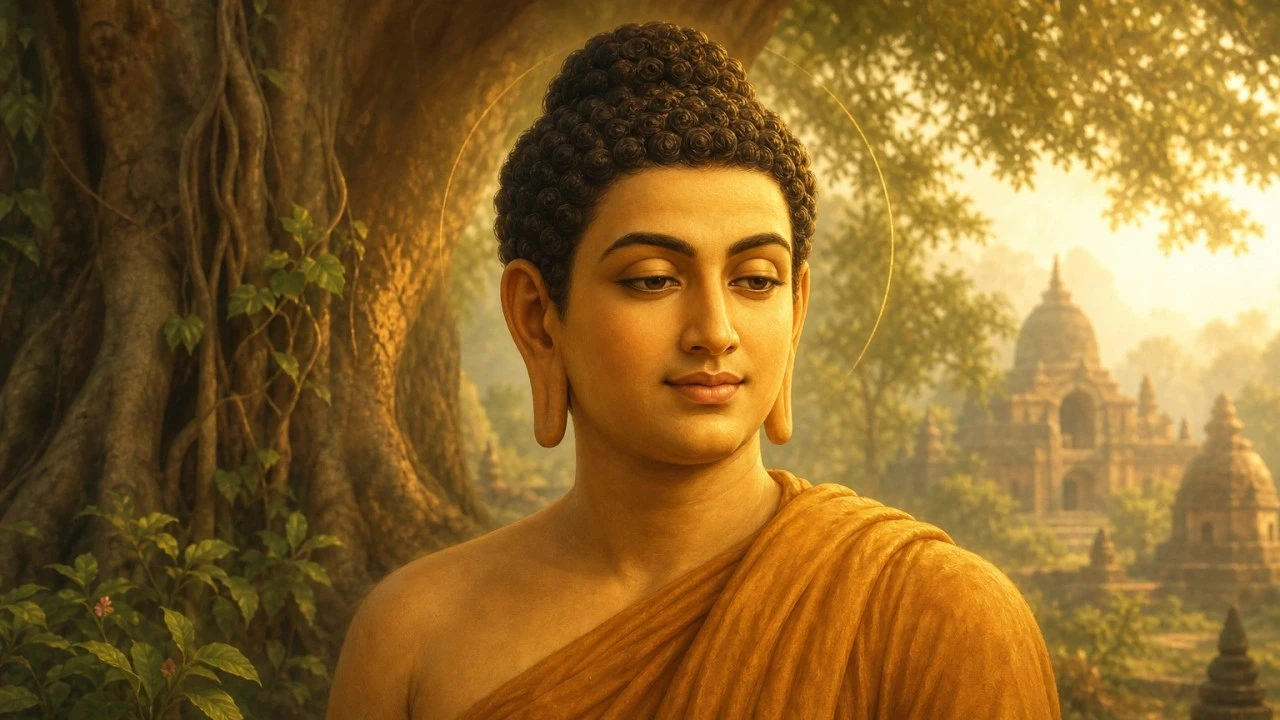
Buddha
Guru yang membantah diskriminasi kasta melalui pertanyaan dan contoh.
Khotbah Bersama Assalāyana
Brahmana muda Assalāyana dipilih untuk membela keunggulan kasta brahmana. Buddha mengujinya lewat kenyataan kelahiran, perilaku, hukum, dan pergaulan antarmanusia, hingga klaim kemurnian berdasarkan kelahiran tidak dapat dipertahankan. Inilah Assalāyana Sutta.
Guru yang membantah diskriminasi kasta melalui pertanyaan dan contoh.
Brahmana muda terpelajar yang diminta berdebat demi keunggulan kasta.
Kota tempat perdebatan berlangsung.
Semua golongan tunduk pada akibat perbuatan; kebajikan dan kebijaksanaan, bukan garis keturunan, menentukan keluhuran.
Para brahmana mendorong pemuda terpelajar Assalāyana untuk berdebat dengan Buddha mengenai klaim bahwa kasta brahmana adalah kasta tertinggi dan paling murni. Assalāyana sebenarnya ragu, tetapi akhirnya datang. Buddha membongkar klaim tersebut melalui pertanyaan sederhana tentang kelahiran manusia, masyarakat lain yang hanya mengenal tuan dan budak, akibat perbuatan baik dan buruk, kemampuan dari semua kasta untuk mengembangkan cinta kasih, serta kenyataan bahwa api yang dinyalakan orang dari kasta berbeda tetap memiliki sifat yang sama. Percakapan akhirnya menunjukkan bahwa kemurnian tidak diwariskan melalui kelahiran, melainkan berkaitan dengan perilaku dan kualitas batin.
mn93:18.1 Knowing this, the Buddha said to him:
mn93:18.2 “Once upon a time, Assalāyana, seven brahmin seers settled in leaf huts in a wilderness region. They had the following harmful misconception:
mn93:18.3 ‘Only brahmins are the best class; other classes are inferior.
mn93:18.4 Only brahmins are the light class; other classes are dark. Only brahmins are purified, not others.
mn93:18.5 Only brahmins are the Divinity’s bosom sons, born from his mouth, born of the Divinity, created by the Divinity, heirs of the Divinity.’
mn93:18.6 The seer Devala the Dark heard about this.
mn93:18.10 So he did up his hair and beard, dressed in magenta robes, put on his lined sandals, grasped a golden staff, and appeared in the courtyard of the seven brahmin seers.
mn93:18.11 Then he wandered about the yard saying,
mn93:18.12 ‘Where, oh where have those brahmin seers gone?
mn93:18.13 Where, oh where have those brahmin seers gone?’
mn93:18.14 Then those brahmin seers said,
mn93:18.15 ‘Who’s this wandering about our courtyard like a village lout?
mn93:18.18 Let’s curse him!’
mn93:18.19 So they cursed Devala the Dark,
mn93:18.20 ‘Be ashes, lowlife!
mn93:18.21 Be ashes, lowlife!’
mn93:18.22 But the more the seers cursed him, the more attractive, good-looking, and lovely Devala the Dark became.
mn93:18.23 Then those brahmin seers said,
mn93:18.24 ‘Our fervor is in vain! Our spiritual path is fruitless!
mn93:18.25 For when we used to curse someone
mn93:18.26 to become ashes,
mn93:18.27 ashes they became.
mn93:18.28 But the more we curse this one, the more attractive, good-looking, and lovely he becomes.’
mn93:18.29 ‘Worthy sirs, your fervor is not in vain; your spiritual path is not fruitless.
mn93:18.30 Please let go of your malevolence toward me.’
mn93:18.31 ‘We let go of our malevolence toward you.
mn93:18.32 But who are you, worthy sir?’
mn93:18.33 ‘Have you heard of
mn93:18.34 the seer Devala the Dark?’
mn93:18.35 ‘Yes, worthy sir.’
mn93:18.36 ‘I am he, worthy sir.’
mn93:18.37 Then they approached Devala and bowed to him.
mn93:18.38 Devala said to them,
mn93:18.39 ‘I heard that when the seven brahmin seers had settled in leaf huts in a wilderness region, they had the following harmful misconception:
mn93:18.40 “Only brahmins are the best class; other classes are inferior.
mn93:18.41 Only brahmins are the light class; other classes are dark.
mn93:18.42 Only brahmins are purified, not others.
mn93:18.43 Only brahmins are the Divinity’s bosom sons, born from his mouth, born of the Divinity, created by the Divinity, heirs of the Divinity.”’
mn93:18.44 ‘That’s right, worthy sir.’
mn93:18.45 ‘But do you know
mn93:18.46 whether your birth mother only had relations with a brahmin and not with a non-brahmin?’
mn93:18.47 ‘We don’t know that.’
mn93:18.48 ‘But do you know
mn93:18.49 whether your birth mother’s mothers back to the seventh generation only had relations with brahmins and not with non-brahmins?’
mn93:18.50 ‘We don’t know that.’
mn93:18.51 ‘But do you know
mn93:18.52 whether your birth father only had relations with a brahmin woman and not with a non-brahmin?’
mn93:18.53 ‘We don’t know that.’
mn93:18.54 ‘But do you know
mn93:18.55 whether your birth father’s fathers back to the seventh generation only had relations with brahmins and not with non-brahmins?’
mn93:18.56 ‘We don’t know that.’
mn93:18.57 ‘But do you know
mn93:18.58 how an embryo is conceived?’
mn93:18.59 ‘We do know that, worthy sir.
mn93:18.61 An embryo is conceived when these three things come together—the mother and father come together, the mother is in the fertile phase of her menstrual cycle, and the virile spirit is ready.’
mn93:18.62 ‘But do you know
mn93:18.63 for sure whether that virile spirit is an aristocrat, a brahmin, a peasant, or a menial?’
mn93:18.64 ‘We don’t know that.’
mn93:18.66 ‘In that case, worthy sir, don’t you know
mn93:18.67 what you are?’
mn93:18.68 ‘In that case, worthy sir, we don’t know
mn93:18.69 what we are.’
mn93:18.70 Given that even those seven brahmin seers could not prevail when pursued, pressed, and grilled by the seer Devala on their own genealogy,
mn93:18.71 how could you prevail now being grilled by me on your own genealogy when you and your denomination do not so much as pick up the last spoonful?”
Terjemahan Indonesia Tiga Keranjang dibuat dengan bantuan AI dan disajikan bersama teks Pāli serta English untuk memudahkan pembacaan dan perbandingan.